

11 Minute
7 Types of Videos Every Business Needs in 2026

Video is no longer a nice-to-have marketing asset. In 2026, businesses are expected to communicate through video across websites, social media, sales presentations, events, and digital campaigns.
The challenge is not whether you should invest in video content — it is understanding which types of videos create the greatest impact. Different business objectives require different video formats, and the most successful brands use a mix of video content to engage audiences throughout the customer journey.
Businesses working with professional
video production services
often build a structured video ecosystem instead of relying on a single video asset.
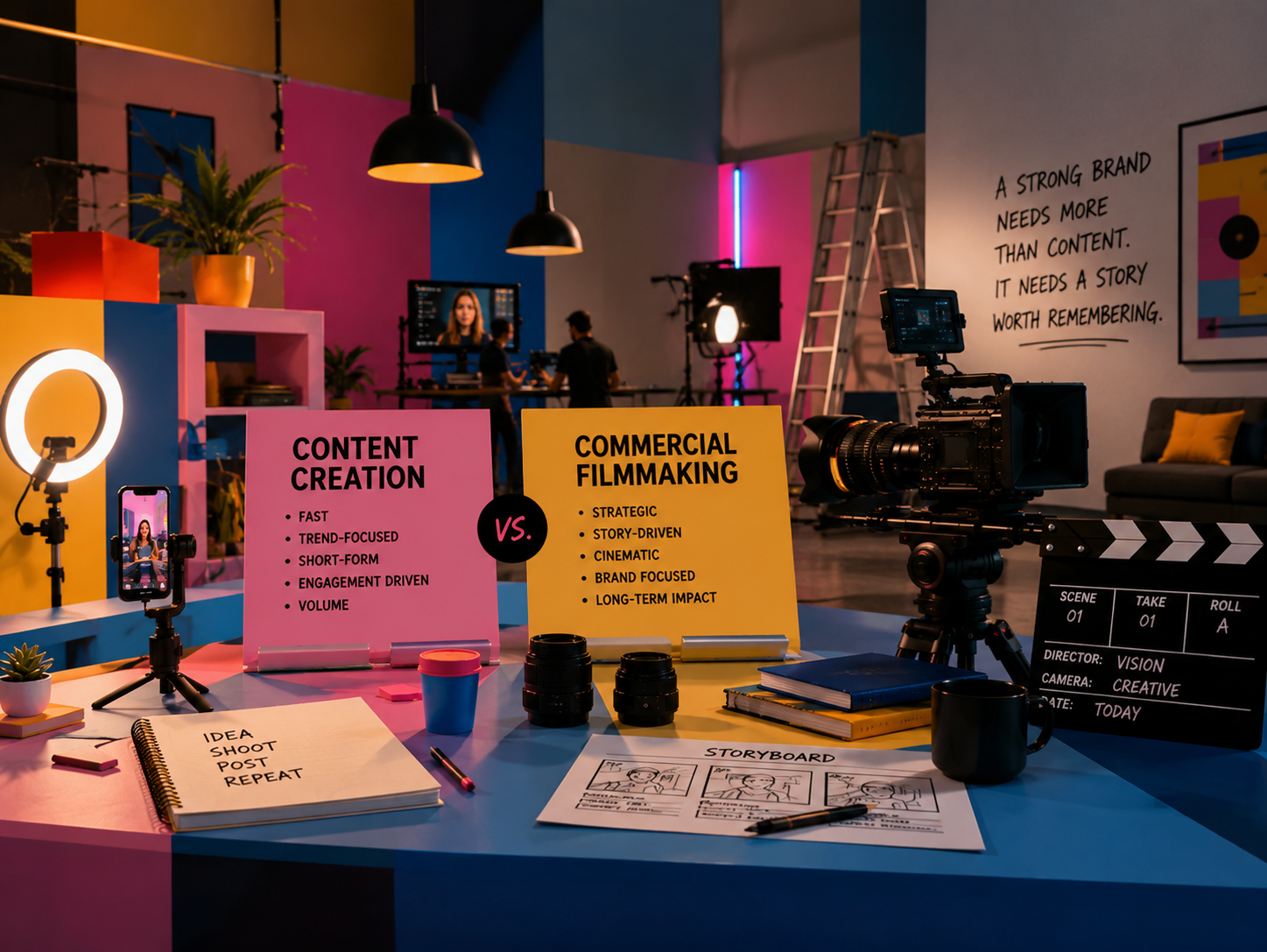
The brands growing fastest in 2026 are not creating more content — they are creating the right types of content.
1. Brand Videos
Brand videos communicate who you are, what you stand for, and why customers should trust your business. They focus on storytelling rather than selling.
A strong brand video helps build recognition, credibility, and emotional connection with audiences.
2. Corporate Videos
Corporate videos help businesses communicate with stakeholders, investors, employees, and customers. These videos are commonly used on websites, events, and presentations.
They provide a professional overview of the company, its culture, services, and achievements.
A corporate video explains what you do. A brand video explains why it matters.
3. Explainer Videos
When products or services are complex, explainer videos simplify information and improve audience understanding.
These videos are especially effective for healthcare, technology, SaaS, and B2B industries.
4. Product Videos
Product videos demonstrate features, benefits, and use cases. They help potential customers understand value faster and support purchase decisions.
Research consistently shows that customers are more likely to engage with products after watching a video demonstration.
💡
Insight: Customers often prefer watching a short product video instead of reading long product descriptions.
5. Social Media Videos
Short-form videos continue to dominate engagement across Instagram, LinkedIn, Facebook, YouTube Shorts, and TikTok.
Brands use social media videos to stay visible, educate audiences, and drive ongoing engagement.
6. Customer Testimonial Videos
Nothing builds trust faster than real customer experiences. Testimonial videos provide social proof and help potential customers feel more confident in choosing your business.
These videos are particularly effective during the decision-making stage of the customer journey.
7. AI-Powered Video Content
AI is helping businesses scale content production faster than ever before. Brands are increasingly using
AI production solutions
to create multiple content variations, accelerate workflows, and support ongoing campaigns.
AI does not replace creativity — it helps creative teams produce more content efficiently while maintaining quality.
The future belongs to brands that build content ecosystems, not one-off videos.
Building a Complete Video Strategy
The most effective businesses do not rely on a single video type. They combine brand videos, corporate films, social content, testimonials, product videos, and AI-powered content to support different business goals.
Many organisations also integrate video into broader
communication strategies
to maintain consistency across channels.
Ready to Build a Stronger Video Strategy?
Whether you need brand films, corporate videos, social content, or AI-powered production, the right video mix can help your business grow faster.
Conclusion
Video continues to be one of the most powerful communication tools available to businesses. Understanding which video formats support your objectives allows you to create more effective content, improve engagement, and strengthen brand visibility.
The businesses that succeed in 2026 will be the ones that invest in a strategic mix of video content rather than relying on a single format.