

13 Minute
Why Healthcare Brands Need Better Storytelling, Not More Content
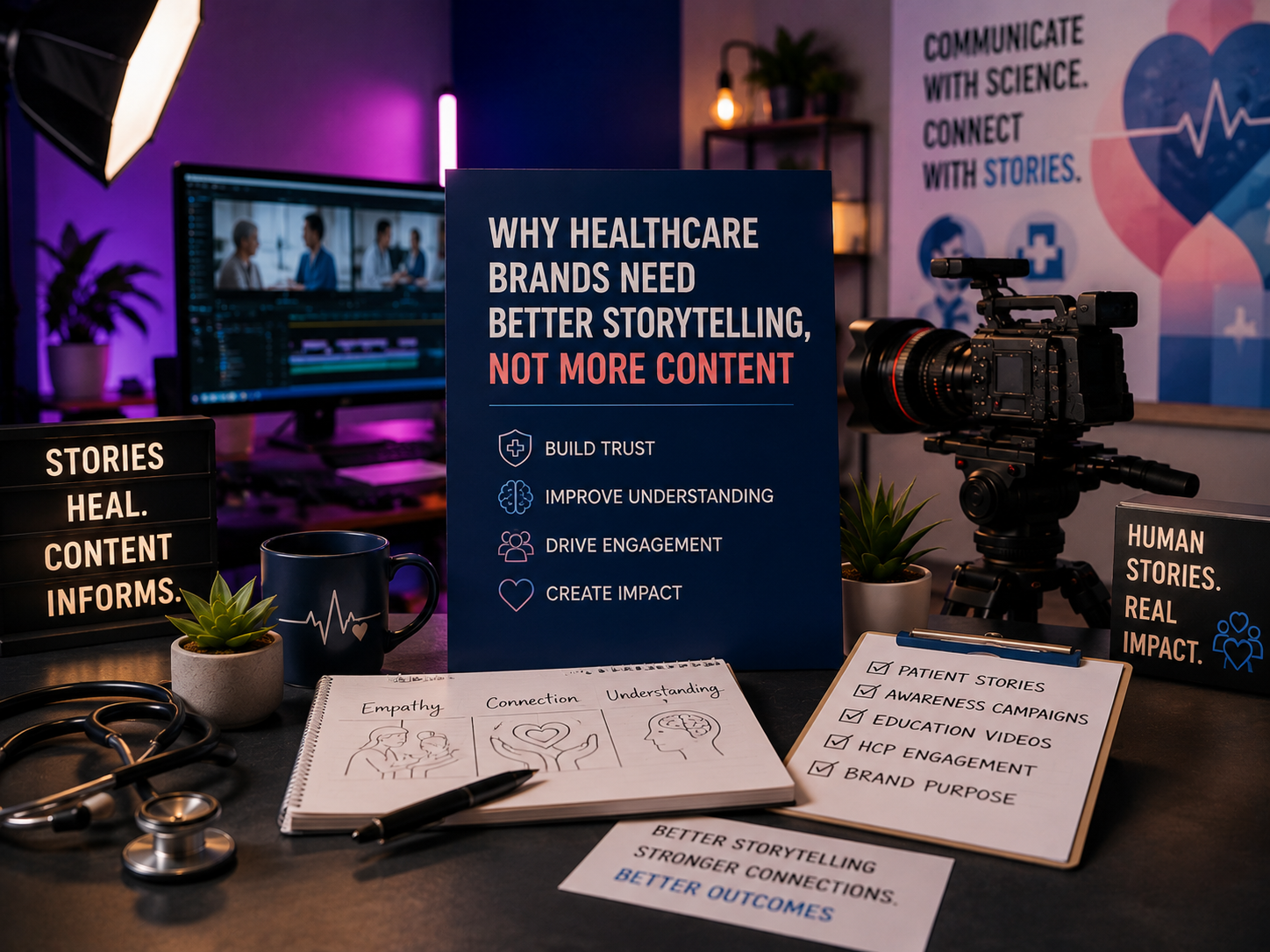
Healthcare brands are producing more content than ever before. From awareness campaigns and patient education materials to social media posts and medical communications, content has become a core part of healthcare marketing.
Yet despite this increase in content production, many healthcare brands still struggle to create meaningful engagement. The challenge is not a lack of content. The challenge is a lack of storytelling.
Healthcare audiences do not connect with information alone. They connect with stories, experiences, and communication that feels relevant, human, and trustworthy.
Leading healthcare organizations increasingly invest in
healthcare communication strategies
that combine scientific accuracy with compelling storytelling to build stronger connections with patients, healthcare professionals, and stakeholders.
People may forget statistics.
They rarely forget stories.
The Content Overload Problem
Healthcare organizations are creating more content than ever before, but audiences are overwhelmed. Every day, patients and healthcare professionals encounter countless articles, videos, campaigns, and educational materials competing for their attention.
The assumption that more content automatically creates more engagement is one of the biggest misconceptions in healthcare marketing. Without a clear narrative and purpose, even the most valuable information can be overlooked.
In many cases, brands focus heavily on facts and features while neglecting the human element that makes communication memorable and impactful.
💡
Key Insight: Audiences remember stories far longer than they remember isolated facts, statistics, or technical information.
Why Storytelling Works in Healthcare
Healthcare communication often involves complex medical concepts, scientific data, and highly regulated information. Storytelling helps make these topics easier to understand while maintaining accuracy and credibility.
Rather than simply presenting information, storytelling creates context. It helps audiences understand why the information matters and how it relates to real-world experiences.
- Improves patient understanding and retention
- Builds trust and credibility
- Increases engagement with healthcare content
- Humanizes complex medical information
- Supports awareness and behavior-change campaigns
- Creates stronger emotional connections
Healthcare communication is not just about delivering information. It is about helping people understand, trust, and act on that information.
The Difference Between Content and Communication
Many healthcare brands measure success by the amount of content they publish. However, publishing more content does not necessarily mean audiences are listening.
Content delivers information. Communication creates understanding. Storytelling bridges that gap by making information meaningful and memorable.
The most successful healthcare campaigns focus on audience understanding before content volume.
The goal is not to simplify healthcare.
The goal is to make it easier to understand.
Storytelling Across the Healthcare Journey
Storytelling can support communication at every stage of the healthcare journey, from awareness and education to engagement and advocacy.
- Patient education programs
- Disease awareness campaigns
- Healthcare professional engagement
- Medical training initiatives
- Internal communications
- Corporate healthcare branding
Healthcare organizations that combine storytelling with structured
communication strategies
often achieve stronger engagement and message retention.
Why Storytelling Matters
Facts explain. Stories connect. In healthcare, that connection can significantly improve awareness, understanding, and action.
The Growing Role of Video in Healthcare Storytelling
Video continues to be one of the most powerful storytelling tools available to healthcare brands. It combines education, emotion, and visual communication to make complex information easier to understand.
Many healthcare organizations use
video production services
to create awareness campaigns, patient education materials, medical explainers, and healthcare professional content.
Video allows brands to communicate more effectively while improving accessibility and audience engagement.
Need Better Healthcare Communication?
The most effective healthcare campaigns combine scientific accuracy with human storytelling. When audiences understand the story, they are more likely to remember the message.
Whether you’re launching a healthcare awareness campaign, creating patient education materials, or developing professional engagement initiatives, storytelling can make communication more impactful.
Conclusion
Healthcare brands do not necessarily need more content. They need better communication. Storytelling helps transform information into understanding, making healthcare messages more impactful, memorable, and effective.
As audiences become increasingly selective about the content they consume, healthcare organizations must focus on creating communication that informs, engages, and builds trust.
In a world saturated with content, the healthcare brands that communicate clearly and humanely will be the ones that earn attention, credibility, and long-term engagement.